
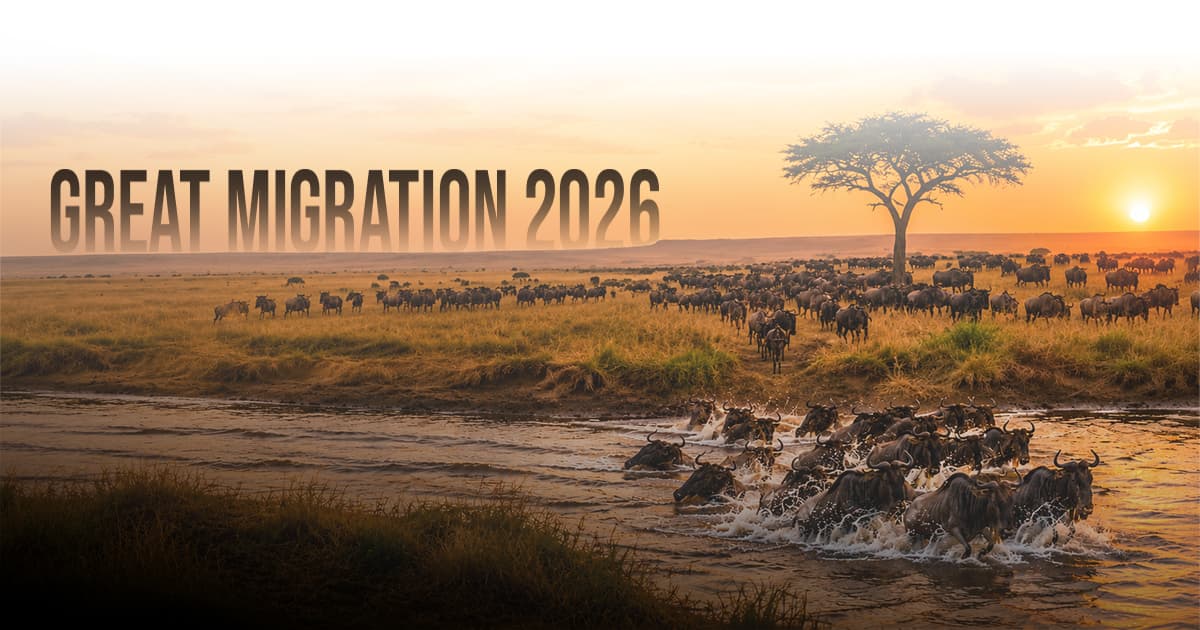
The Great Migration is coming. From July to October, millions of wildebeest, zebra and gazelle cross the Mara River in one of the most spectacular wildlife events on earth — drawing tens of thousands of international and domestic tourists to the Maasai Mara National Reserve.
For safari lodges, camps and hotels in and around the Mara, this is the most important revenue opportunity of the year. Demand will exceed supply for several weeks. International guests will pay premium rates. Longer stays are the norm.
The question is not whether you will fill your rooms. You will. The real question is: are you maximising revenue from every booking, every guest and every night?
Primary peak: August–October (river crossings peak August–September) · Secondary peak: December–March (calving season, Serengeti) · Shoulder: July, November
Why the Great Migration is different from regular peak season
Migration season is not just high season — it is the period when the gap between hotels that manage revenue well and those that do not becomes most visible. Three things make it unique:
- International guests with higher willingness to pay — travellers who have saved for years for this trip are less price-sensitive than domestic guests. Premium inventory and packages sell at rates that would not work in low season.
- Longer average stays — migration guests typically book 3–5 nights rather than 1–2, which increases total revenue per booking and makes inventory management more critical.
- Advance bookings from far out — many international guests book 6–12 months in advance. Hotels that are not visible and bookable online by January miss this booking window entirely.
Migration season calendar: when to prepare, when to price up
| Month | Migration activity | Pricing strategy |
|---|---|---|
| January–March | Advance bookings arriving for July–October | Open migration inventory early. Set peak rates now. |
| April–June | Bookings accelerating. Last slots filling. | Increase rates as occupancy rises. Close out low rates. |
| July | Migration begins. First crossings possible. | Full peak rates. Minimum stay 2 nights recommended. |
| August–September | Peak crossings. Highest demand of the year. | Maximum rates. Minimum stay 3 nights. No discounting. |
| October | Late migration. Still strong demand. | Maintain peak rates. Begin opening low season rates from Nov. |
| November–December | Migration ends. Shoulder into calving season. | Transition to shoulder rates. Promote December calving season. |
7 strategies to maximise migration season revenue
Set peak-season rates — and push them across every channel simultaneously
Many lodges still set rates manually across individual OTA extranets. During migration season, you should be pushing rate increases across Booking.com, Expedia, Airbnb, SafariBookings, your own website and every other channel at the same time — in one action.
With DJUBO's channel manager, one rate update pushes to all 130+ connected channels instantly. If demand spikes on a Tuesday and you want to increase Thursday and Friday rates, it takes seconds — not 45 minutes of extranet logins.
→ Use minimum stay restrictions (2–3 nights) during peak August–September to avoid single-night gaps in your calendar.Get your direct booking engine live before January
International guests planning a Great Migration trip research and book months in advance. Many of them will find your website before they find you on Booking.com — especially if you rank for "Maasai Mara safari lodge" searches.
If your website has no booking engine, that traffic goes to OTAs instead of booking direct. A guest who books through Booking.com costs you 15–18% commission. A guest who books direct on your website costs zero.
DJUBO Direct Book accepts payments in USD and EUR via Visa and Mastercard — the payment methods international safari guests use. Kenyan guests can pay by M-Pesa.
→ Even shifting 20% of your migration bookings to direct saves a lodge doing KES 2M in migration revenue approximately KES 300,000–360,000 in commission annually.Build migration packages — not just room rates
Migration season guests are buying an experience, not just a room. Guests who have flown from Europe or North America for this trip are not shopping for the cheapest rate — they want to know what the stay includes.
- Full-board migration package (accommodation + all meals + 2 game drives daily)
- Premium package + hot air balloon safari
- Photography package (private vehicle, guide, morning and evening drives)
- Family migration package (minimum 2 nights, children's activities included)
Packages increase average booking value per guest and reduce the amount of upselling your team has to do at check-in — it is already included.
→ Packages can be configured as separate rate plans in DJUBO and pushed to your booking engine and selected OTAs simultaneously.Manage inventory tightly — no overbookings, no unsold rooms
During migration season, an overbooking is a serious problem. Walking a guest who has travelled from Europe for this specific trip damages your reputation in a way that takes years to recover from.
Real-time pooled inventory — where all your OTAs, your direct booking engine and your front desk draw from the same live room count — eliminates overbooking risk entirely. When one channel books a room, it disappears from every other channel instantly.
→ Review your channel distribution before peak season. Lodges that only sell on 2–3 channels leave revenue on the table. SafariBookings and Hotelbeds reach B2B tour operator markets that Booking.com does not.Use scarcity messaging — it works
When you have 2 tents left for the last week of August, say so. On your booking engine, on OTA listings, in your email responses to enquiries. Scarcity creates urgency — guests who were considering their options decide faster.
- "Only 2 tents remaining for August 15–20"
- "Peak migration dates — book by May 30 for guaranteed availability"
- "Last room available at this rate"
Upsell high-value experiences at booking and check-in
Migration season guests are the most upsell-ready guests you will see all year. They have chosen a premium destination and are already spending significantly. What else will they pay for?
- Hot air balloon safaris over the Mara (one of the world's most booked experiences)
- Private vehicle and guide for exclusive game drives
- Cultural visits to Maasai villages
- Sundowner dinners in the bush
- Photography guide service
Manage your team with hotel software — not WhatsApp groups
During peak season, your team is under maximum pressure. Housekeeping must turn rooms quickly for arriving guests. Front desk must handle check-ins from guests arriving by bush plane and road at the same time. Miscommunication during migration season costs you in guest experience and reviews.
DJUBO PMS gives your team a shared live view — housekeeping can see which rooms need to be ready, front desk can see check-ins arriving, management can see occupancy and revenue in real time — all from phones on mobile data in the field.
→ Lodges with integrated housekeeping management turn rooms 20–30 minutes faster during peak periods — meaningful when you have back-to-back arrivals and departures on the same day.How DJUBO helps Maasai Mara properties during peak season
All seven strategies above require one thing: technology that keeps up with peak season demand. Here is what DJUBO specifically brings to a migration season operation:
Instant rate updates across 130+ OTAs
One action pushes rate changes to every channel — including SafariBookings and Hotelbeds.
Direct booking engine with USD payments
International guests book and pay in USD or EUR directly on your website — zero commission.
Zero overbookings — pooled inventory
All channels draw from the same live inventory. A booking on any channel closes availability everywhere instantly.
Mobile app for lodge operations
Housekeeping, check-ins and billing managed from phones on mobile data — no desktop required in the field.
Real-time revenue analytics
RevPAR, ADR, occupancy by channel and revenue by source — updated live so management can make pricing decisions during peak season.
M-Pesa for domestic guests
Kenyan guests pay by M-Pesa STK Push at check-in or on the booking engine — no manual Paybill reconciliation.
During Great Migration season, the difference between a lodge that maximises revenue and one that just fills rooms comes down to three things: pricing discipline (pushing rates up as demand rises), direct booking capability (converting website traffic without paying OTA commission), and operational efficiency (serving more guests with fewer errors during the busiest weeks of the year). Technology is what makes all three possible at scale.
Get your lodge ready for migration season 2026
Talk to our team about setting up DJUBO before peak season — channel manager, direct booking engine and PMS. Most lodges go live in 7–14 working days.
Book a free demo →